Use of ethylene-vinyl acetate in early childhood education: bibliometric overview and environmental implications
DOI:
https://doi.org/10.29327/2520355.14.4-8Palavras-chave:
Environmental education, Scientometrics, Educational policy, Waste managementResumo
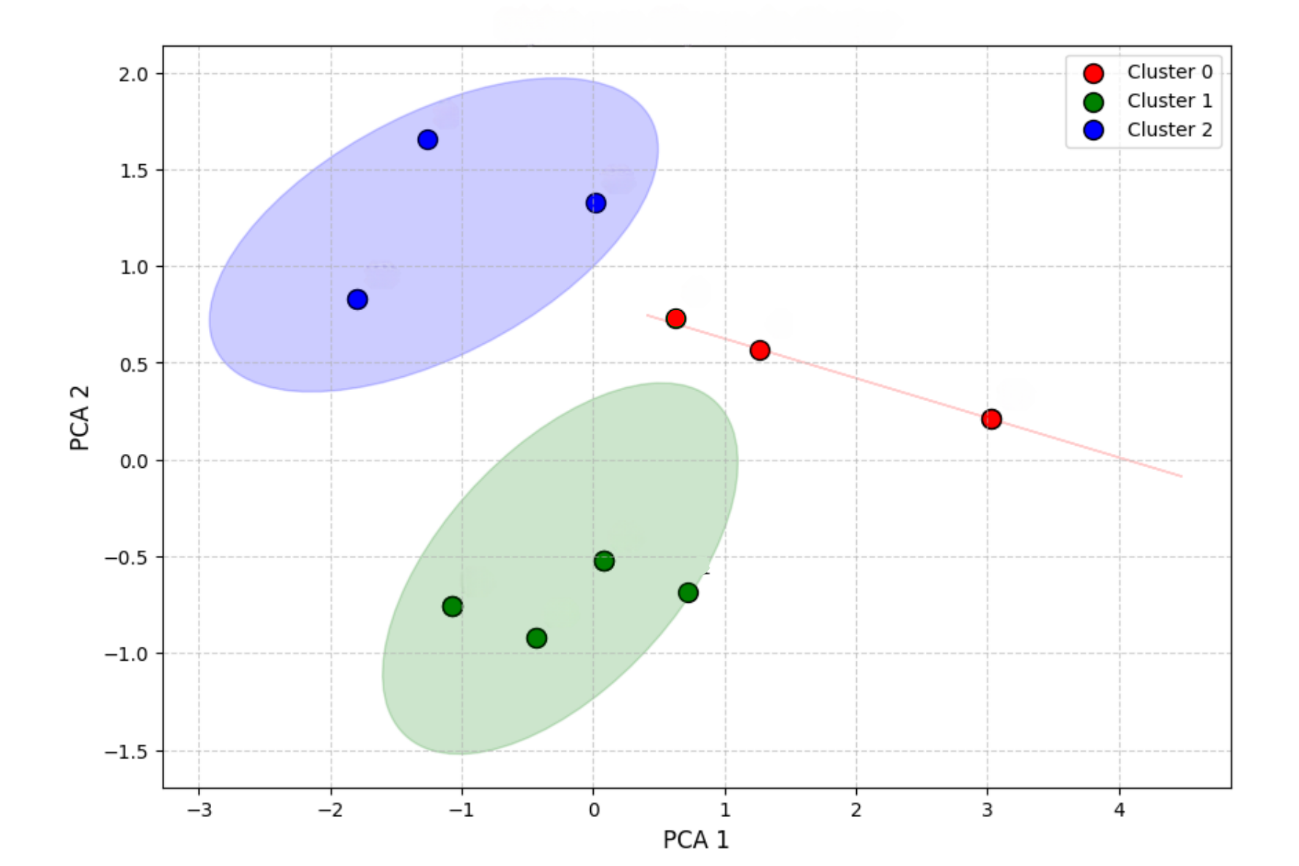
Ethylene-vinyl acetate (EVA) is a copolymer whose properties can be modified by varying the amount of vinyl acetate. Among its applications, the creation of educational play materials stands out; however, improper disposal of EVA poses an environmental risk due to its potential as a pollutant. Thus, this study aimed to analyze, through bibliometric methods, the scientific discourse related to EVA and correlate the findings with a case study evaluating its use in an educational center. Initially, a bibliometric analysis was conducted using data from the last ten years, highlighting the predominance of publications in polymer and materials science, while few studies focus on the environmental and educational impacts of EVA. A case study conducted at a Municipal Center for Early Childhood Education, using Principal Component Analysis to reduce dimensionality and identify latent patterns in the data, followed by K-Means clustering for group segmentation, revealed that although many educators use EVA in educational activities, there is little awareness of its environmental impacts and inadequate disposal practices. Bibliometric analysis revealed EVA research predominantly focuses on materials science, with minimal attention to environmental and educational impacts. A case study identified three educator profiles: Cluster 1 (60%) showed high environmental awareness but inconsistent sustainable practices; Cluster 0 (18%) demonstrated high EVA dependence with low sustainability awareness; Cluster 2 (22%) exhibited moderate awareness but limited practical alternatives. It is concluded that a transition to more sustainable educational practices requires a concerted effort among educators, institutions, and policymakers, aligned with the Sustainable Development Goals.
Referências
ARDOIN, Nicole M.; BOWERS, Alison W. Early childhood environmental education: A systematic review of the research literature. Educational Research Review, v. 31, p. 100353, 2020. DOI: 10.1016/j.edurev.2020.100353.
BRASIL. Lei nº 12.305, de 2 de agosto de 2010. Institui a Política Nacional de Resíduos Sólidos; altera a Lei nº 9.605, de 12 de fevereiro de 1998; e dá outras providências. Diário Oficial da União, Brasília, DF, 3 ago. 2010. Disponível em: http://www.planalto.gov.br/ccivil_03/_ato2007-2010/2010/lei/l12305.htm. Acesso em: 03/2025.
COELHO, J. R. D.; GÓES, A. R. T. Geometria e Desenho universal para aprendizagem: uma revisão bibliográfica na Educação Matemática inclusiva. Educação Matemática Debate, v. 5, n. 11, p. 1-26, 2021. DOI: 10.46551/emd.e202122
DRAGOS, C. M.; DRAGOS, S. L. Bibliometric approach of factors affecting scientific productivity in environmental sciences and ecology. Science of the Total Environment, v. 449, p. 184-188, 2013. DOI: 10.1016/j.scitotenv.2013.01.057.
GABLE, Guy G. Integrating case study and survey research methods: an example in information systems. European Journal of Information Systems, v. 3, n. 2, p. 112-126, 1994. DOI: 10.1057/ejis.1994.12.
GEYER, Roland; JAMBECK, Jenna R.; LAW, Kara L. Production, use, and fate of all plastics ever made. Science Advances, v. 3, n. 7, e1700782, 2017. DOI: 10.1126/sciadv.1700782.
GUO, Hongwei; YUE, Lei; RUI, Gao; MANAS-ZLOCZOWER, Ica. Recycling poly (ethylenevinyl acetate) with improved properties through dynamic cross-linking. Macromolecules, v. 53, n. 1, p. 458-464, 2019. DOI: 10.1177/08927057221095388.
HASAN, Bayan M. S.; ABDULAZEEZ, Ammar M. A review of principal component analysis algorithm for dimensionality reduction. Journal of Soft Computing and Data Mining, v. 2, n. 1, p. 20-30, 2021. DOI: 10.30880/jscdm.2021.02.01.003.
HENDERSON, Alan M. Ethylene-vinyl acetate (EVA) copolymers: a general review. IEEE Electrical Insulation Magazine, v. 9, n. 1, p. 30-38, 1993. DOI: 10.1109/57.249923.
HORTON, Alice A. Plastic pollution: When do we know enough?. Journal of Hazardous Materials, v. 422, p. 126885, 2022. DOI: 10.1016/j.jhazmat.2021.126885.
JOHANSEN, M. R.; CHRISTENSEN, T. B.; RAMOS, T. M.; SYBERG, K. A review of the plastic value chain from a circular economy perspective. Journal of Environmental Management, v. 302, p. 113975, 2022. DOI: 10.1016/j.jenvman.2021.113975.
KIM, J.; SEUNGWON, L.; BYOUNG, C. K.; BONG-SEOB, S.; JONG-YOUNG, J.; CHAE, D. W. Effect of VA and MWNT contents on the rheological and physical properties of EVA. KoreaAustralia Rheology Journal, v. 28, n. 1, p. 41-49, 2016. DOI: 10.1007/s13367-016-0004-9.
LE, V. G. et al. A comprehensive review of micro-and nano-plastics in the atmosphere: Occurrence, fate, toxicity, and strategies for risk reduction. Science of The Total Environment, p. 166649, 2023. DOI: 10.1016/j.scitotenv.2023.166649.
MACLEOD, M.; ARP, H. P. H.; TEKMAN, M. B.; JAHNKE, A. The global threat from plastic pollution. Science, v. 373, n. 6550, p. 61-65, 2021. DOI: 10.1126/science.abg5433.
MINAS GERAIS. Lei nº 14.128, de 19 de dezembro de 2001. Dispõe sobre a política estadual de reciclagem de materiais e sobre os instrumentos econômicos e financeiros aplicáveis à gestão de resíduos sólidos. Diário do Executivo, Minas Gerais, 20 dez. 2001. Disponível em: https://www.almg.gov.br/consulte/legislacao/leis/L14128.html. Acesso em: 03/2025
OECD. Global Plastics Outlook - Plastics waste by region and end-of-life fate. 2023. Disponível em: https://ourworldindata.org/grapher/share-plastic-fate. Acesso em: 03/2025.
PARIATAMBY, A. et al. Status of microplastic pollution in aquatic ecosystem with a case study on Cherating River, Malaysia. Journal of Engineering and Technological Sciences, v. 52, n. 2, p. 222-241, 2020. DOI: 10.5614/j.eng.technol.sci.2020.52.2.7.
R CORE TEAM. R: A Language and Environment for Statistical Computing. Vienna, Austria: R Foundation for Statistical Computing, 2024. Disponível em: https://www.R-project.org/. Acesso em 06/2025.
RHODES, C. J. Plastic pollution and potential solutions. Science Progress, v. 101, n. 3, p. 207-260,2018. DOI: 10.3184/003685018X15294876706211.
SI, H.; SHI, J. G.; TANG, D.; WEN, S.; MIAO, W.; DUAN, K. Application of the theory of planned behavior in environmental science: a comprehensive bibliometric analysis. International Journal of Environmental Research and Public Health, v. 16, n. 15, p. 2788, 2019. DOI: 10.3390/ijerph16152788.
SILVEIRA, B. W. M. et al. Assembly and use of a low-cost paracentesis simulator for the teaching of puncture and drainage of ascites. Revista do Colégio Brasileiro de Cirurgiões, v. 49, p. e20223099, 2022. DOI: 10.1590/0100-6991e-20223099.
Downloads
Publicado
Como Citar
Edição
Seção
Licença
Proposta de Política para Periódicos de Acesso Livre
Autores que publicam nesta revista concordam com os seguintes termos:
- Autores mantém os direitos autorais e concedem à revista o direito de primeira publicação, com o trabalho simultaneamente licenciado sob a Licença Creative Commons Attribution que permite o compartilhamento do trabalho com reconhecimento da autoria e publicação inicial nesta revista.
- Autores têm autorização para assumir contratos adicionais separadamente, para distribuição não-exclusiva da versão do trabalho publicada nesta revista (ex.: publicar em repositório institucional ou como capítulo de livro), com reconhecimento de autoria e publicação inicial nesta revista.
- Autores têm permissão e são estimulados a publicar e distribuir seu trabalho online (ex.: em repositórios institucionais ou na sua página pessoal) a qualquer ponto antes ou durante o processo editorial, já que isso pode gerar alterações produtivas, bem como aumentar o impacto e a citação do trabalho publicado (Veja O Efeito do Acesso Livre).